No standardized area published
Assembling intelligence…
Reading listings, research log, and source-health evidence.
 BunkerStrategyIntelligence terminal
Reading listings, research log, and source-health evidence.
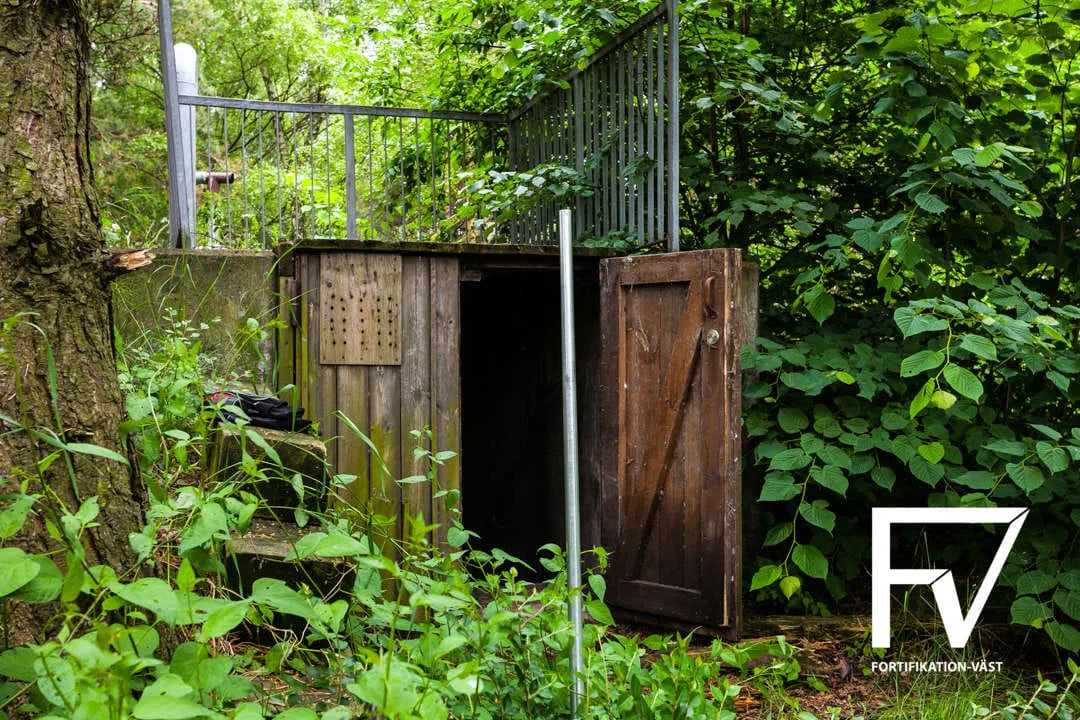
The source describes one preserved 1970s forward civil-defence rescue-unit shelter in an unnamed military town, explaining its personnel-only protection role and the general wartime concept of dispersing municipal rescue crews.
No standardized area published
Start date not established
Completion date not established
Unit-attributed from its source article
Functional recreation of the documented facility in Sweden using current construction methods and 2026 prices, preserving the documented capacity, protection, autonomy and redundancy. Ex VAT; excluding land, financing, remediation, classified mission equipment and data-centre hardware.
Provisional audited central concept screen; expected-risk calibration is pending. It is not yet a risk-adjusted expected cost.
Method, scope and confidence →9 photographs sourced from the original article, with captions where available.
Published, calculated and proxy dimensions are deliberately separated. Missing evidence stays visible instead of becoming zero.
Rock in place removed before bulking; the excavation-pricing quantity.
Internal airspace; not the amount of rock removed.
Blasted material after bulking; the haul and disposal quantity.
These cubic metres are not interchangeable.
Usable, floor or footprint area; the label is preserved because these are not always interchangeable.
No usable quantity in the reviewed source · Evidence gapRock in place removed before bulking; the quantity used to price excavation.
12% of structural scope as a buried-class screen · Audit revisionInternal air or chamber volume. It is not solid excavation without overbreak, access and support geometry.
No usable quantity in the reviewed source · Evidence gapBlasted material after bulking, or its handled mass. No swollen cubic metres are inferred when only tonnes are modelled.
No rock mass-handling scope applies to the audited morphology. · Audited morphologyLength alone is insufficient; a costable tunnel also needs width, height or cross-sectional area.
No tunnel geometry applies to the audited morphology. · Audited morphologyPublished chamber or arch geometry used to test volume and support assumptions.
No usable quantity in the reviewed source · Evidence gapRock surface requiring bolts, mesh or shotcrete, preferably measured in square metres.
Rock-support surface does not apply to this audited morphology. · Audited morphologyCounts and dimensions of access, transfer, utility and emergency interfaces.
Archetype portal/escape count. · Reviewed base modelCast inner structures and linings, kept separate from excavated rock and reinforcement mass.
Proxy size for a 1970s forward rescue-unit personnel shelter; no published area or capacity exists. Archetype concrete factor is 1.8 m³ per usable m². · Reviewed base modelGroundwater, inflow, drainage, pumping and moisture-control evidence affecting construction and operation.
No usable quantity in the reviewed source · Evidence gapThe headline answers the current replacement question. Historic cost, CPI and construction-index comparisons remain separate because they answer different questions.
Different specifications receive different estimates; they are not used as the upper and lower limits of one answer.
Preserves documented capacity, protection, autonomy and redundancy using current construction methods.
Requires a modern structural, fire, protection and supplier performance brief.
Requires IT load, cooling topology, grid capacity, redundancy and autonomy. Server hardware is excluded.
No representative facility construction cost selected
General purchasing-power comparison—not a construction quote
Broad BKI proxy—not a bunker-specific rebuild price
Scope lock. Functional recreation of the documented facility in Sweden using current construction methods and 2026 prices, preserving the documented capacity, protection, autonomy and redundancy. Ex VAT; excluding land, financing, remediation, classified mission equipment and data-centre hardware. The article supports one preserved 1970s forward rescue-unit personnel shelter and explicitly says this example had no vehicle shelter. The discussion of five personnel out of a 20-person fire service is illustrative, not a stated design capacity. No area, sh…
Audit revision sweden-replacement-audit-2026.08.15. The central WBS below incorporates the 61-article review. The former deterministic low/base/high cases remain available only as sensitivities and revision history.
Direct works + owner / design / investigation + legacy concept contingency
Central quantities × current installed-rate screen.
Not yet probability-weighted. The current legacy concept contingency remains separate.
22% applied to the direct-work screen.
Raw model SEK 31.3m · rounded for Confidence E.
Transitional limitation. SEK 5,322,735 is still a blanket concept contingency, not probability-weighted expected risk. This is why the amount is labelled provisional. The audited rescue shelter WBS remains the central scope ledger.
The article confirms a personnel-only shelter and explicitly excludes vehicle shelter.
8/100 article-geometry completeness. Detailed source extraction is available in the original-article audit.
Confidence E · geometry completeness 8/100
Largest active lines in the audited central component schedule.
The workbook publishes one revised central schedule. Its prior low and high stress cases are retained only under sensitivities; no line-level probability distributions are implied.
Excavation, temporary works, waterproofing and backfill · SEK 211,680
Drainage, sumps and moisture control · SEK 70,560
Integrated testing, commissioning and public-safe documentation · SEK 595,000
| Change | Scope | Audited base | Quantity / rate basis | Provenance |
|---|---|---|---|---|
| Retained | 03Buried concrete personnel shelterStructural | SEK 1,764,000 | 252 m³ × SEK 7,000 / m³Class Proxy quantity · Assumption rateProxy size for a 1970s forward rescue-unit personnel shelter; no published area or capacity exists. Archetype concrete factor is 1.8 m³ per usable m². | Existing archive WBS |
| Retained | 04Installed reinforcementStructural | SEK 749,700 | 21,420 Kg × SEK 35 / KgClass Proxy quantity · Assumption rateProxy size for a 1970s forward rescue-unit personnel shelter; no published area or capacity exists. Archetype concrete factor is 1.8 m³ per usable m². Archetype reinforcement intensity is 85 kg per concrete m³. | Existing archive WBS |
| Retained | 05Personnel-shelter fit-outBuilding Services | SEK 3,500,000 | 140 m² / 1,507 ft² × SEK 25,000 / Usable m²Class Proxy quantity · Assumption rateProxy size for a 1970s forward rescue-unit personnel shelter; no published area or capacity exists. Fit-out factor is 1 times the reference scale. | Existing archive WBS |
| Retained | 06Protected ventilation and standby allowanceProtection | SEK 8,400,000 | 0.47 Project × SEK 18,000,000 / ProjectAssumption quantity · Assumption rateOne protection package per 300 usable m² / 3,229 ft², subject to a 0.25-package minimum. | Existing archive WBS |
| Retained | 07Entry, escape and utilitiesSite And Access | SEK 6,000,000 | 1 Project × SEK 6,000,000 / ProjectAssumption quantity · Assumption rateArchetype portal/escape count. | Existing archive WBS |
| Added | R328Excavation, temporary works, waterproofing and backfill | SEK 211,680 | 12% of structural scope as a buried-class screen | Class assumption — earthworks take-off required |
| Added | R329Drainage, sumps and moisture control | SEK 70,560 | 4% of structural scope as a buried-class screen | Class assumption — site investigation/RFQ required |
| Added | R330Integrated testing, commissioning and public-safe documentation | SEK 595,000 | 5% of MEP/protection/mission-system scope | Class assumption — commissioning plan required |
Active base WBS SEK 21,290,940 · owner/design and contingency are added in the scenario cards above · 12 removed rows across the archive remain visible as change history.
The three inputs most likely to move the current screen.
These deterministic stress cases simultaneously vary quantities, rates, scope allowances and contingency. They are not confidence intervals and no longer serve as the headline answer.
Links support a rate, scope boundary or method. Context-only sources are not represented as quotations.
Public ready-mix material check only; installed underground rates require RFQ.
Public retail material check only; cutting, bending, fixing, waste and underground logistics require RFQ.
MCF's knowledge-document register establishes civil-shelter system scope but supplies no project prices; all three unit rates are transparent screening assumptions.
Public sources establish specialized tested products but not project prices.
Protected dispersal point for part of a municipal rescue-service response force during war.
No lifecycle dates were established from the public source.
8 reviewed claims. Evidence locators resolve against the stored article hash or archived snapshot.
| Subject | Claim | Value | Date | Evidence | Certainty |
|---|---|---|---|---|---|
| facility claim | Claim | This visited site used a purpose-built personnel shelter for the forward unit. | — | B004 | Reported |
| facility claim | Claim | The site had personnel protection only; it had no vehicle shelter inside or adjacent to the facility as described. | — | B004 | Reported |
| facility claim | Claim | The article reports construction in the 1970s. | — | B007 | Reported |
| facility claim | Claim | The article described it as a preserved example and one of few then still in good condition. | — | B007 | Reported |
| class context claim | Claim | Forward units could use purpose-built shelters, existing shelters such as shelter garages, and sometimes internal or adjacent vehicle protection. | — | B004 | Reported |
| class context claim | Claim | The wartime concept dispersed rescue-service personnel across a municipality to reduce dependence on a vulnerable main fire station and improve local response after infrastructure damage. | — | B005 | Reported |
| class context claim | Claim | The article says crews worked two, possibly three, shifts at a time; wartime-assigned personnel would be led by rescue-service professionals. | — | B006 | Reported |
| current-state claim | Claim | At publication the facility was described as preserved and in good condition. | — | B007 | Reported |
No additional structured gaps were recorded for this facility record.
No named project parties were extracted.